

Holly Sierra and I, co-creators of Chrysalis Tarot, were thrilled back in 2014 when the Tarosophy Tarot Association announced Chrysalis as recipient of its prestigious Deck of the Year award. Tarosophy places great emphasis on the spiritual dignity of tarot, so for us this recognition was both humbling and immensely gratifying. From its inception, we aimed specifically to make a worthy spiritual contribution to tarot’s growing body of work.
When we first placed Chrysalis on the drawing board, neither of us had heard the phrase spiritual dignity of tarot. We simply had hoped to accomplish our spiritual goals for Chrysalis within the context of the age-old mythology and spiritual teaching called The Hero’s Journey.
Analogous to the Hero’s Journey is the Quest for the Holy Grail, a universal legend symbolizing self-transformation, the personal metamorphosis that inspired the name Chrysalis. Mythologist Joseph Campbell called the grail legends the foundational myths of Western civilization. The grail quest is a quest to discover the Authentic Self. The Hero’s Journey allegorizes this struggle that occurs between the authentic (spiritual) Self and the ego, the ultimate self-sabotager.
We sought also to create a deck well suited to the emerging worldview or paradigm shift that’s been unfolding for some 25 years and is now (2022) at a tipping point. This shift traces its shallow roots to the Neo-Pagan and New Age Movements; its deep roots to the turbulent social upheavals of the ’60s that advanced civil rights, women’s rights and ecology, epitomized in Chrysalis by the Green Man and Gaia archetypes.
Although not New Age per se, the secularity of Chrysalis dovetails with several New Age Philosophy tenets, most notably holism and humanism. Creating a definitively secular deck was another of our goals; we dared not burden Chrysalis with dogmatic religious frameworks, iconography or esoteric symbolism. Neither did we want to create a deck that bowed to archaic institutional hierarchies that represented absolute civil and spiritual authority; in Chrysalis all spiritual paths are equally valid and respected; personal responsibility is paramount. Chrysalis is not about conformity of dogma or “correct beliefs,” but rather about questioning all beliefs and using innate critical thinking skills.

Chrysalis abhors patriarchy, even hierarchy. We strove for overall balance between our deck’s yin-yang energies without social stratification (one reason for replacing the “court cards”). We pushed the envelope to accomplish a masculine-feminine balance and promote personal spiritual empowerment. For example, when we refer to “the divine” in Chrysalis we generally refer either to the divine feminine or to the androgynous divine child within. The Divine Child (pictured above) is both an Otherworld archetype and a Chrysalis major arcana card.
In Chrysalis, the Otherworld is the name we gave to the abode of archetypes, ancestors, faeries and myriad other benevolent spirits, including shamanic spirit animals. It’s corollary is often called the Akashic Field.
We engage this Otherworld via 22 major tarot archetypes and other archetypes unique to Chrysalis. This extended family includes our replacements for tarot’s traditional court cards, an ensemble of medieval troubadours we call The Troupe. Members of The Troupe, who are also archetypes, variously represent spirit guides and ancestors along with the querent’s personal characteristics and personality traits. They also can symbolize helpful individuals, often strangers on their own journey who the querent might meet along the way. All Troupe members have personal spirit animal attributes known as familiars illustrated on their cards. Totems or spirit animals also are found on Chrysalis cards.

Otherworld engagement via archetypes, an aspect of tarot renowned psychologist C.G. Jung found fascinating, is accomplished through shamanic-style communication between the Collective Unconscious (the Otherworld) and the personal unconscious mind. Information streamed from the Otherworld resonates during a tarot reading and is interpreted intuitively – tarot is not an exercise in code breaking. Chrysalis regards the 78 tarot cards as symbols of multivalent potentialities that mean different things to different people at different times in their lives.
Archetypes of the collective unconscious have resonating frequencies and are quantumly entangled with the personal unconscious; the stronger the querent’s personal bond with a particular archetype, the stronger the resonance. As Nicolai Tesla wrote, “[We should always] think in terms of energy, frequency and vibration.” Everything in nature vibrates on a specific frequency, including the Otherworld archetypes.
In adapting Chrysalis to the new connected-universe worldview, we first had to identify this worldview’s salient characteristics. First and foremost, it’s characterized by belief in a living, interconnected and interdependent universe. In this living universe, we become co-creators and function as biological circuits (feedback loops, if you will) connected to a vast Web of Life, as Fritjof Capra termed it. Capra’s Web of Life includes everything in the cosmos; everything is energy, including matter and information.
Secondly, the new worldview is both spiritual and material as well as scientific. It provides a groundwork for a new rational spirituality. Although this notion places Chrysalis at odds with classical Newtonian mechanics, it is complementary with quantum mechanics and the New Science of unified physics. This New Science of unified physics is both holistic and holographic. It views contemporary notions of a dead-universe separated from reality as a dangerous illusion, a fact sadly borne out by human history.

Thirdly, Chrysalis emphasizes the importance of healing through selfless compassion. Having compassion and empathy for others, as well as for ourselves, provides a powerful instrument for healing. Moreover, compassion and empathy unite us rather than separate us. Tarot cannot assist with personal transformation unless it also helps heal a broken psyche. To that end many Chrysalis cards evoke healing and Chrysalis is often described as a healing deck.
Among the many changes Chrysalis makes to traditional tarot, a schema well over 100 years old, is the elimination of limiting belief structures and strictures that engender fear, anxiety or negativity. All pose significant stumbling blocks to self-transformation and healing.
Any self-transformation modality is, by definition, a dynamic spiritual enterprise. To claim spiritual dignity, it must therefore afford spiritual efficacy. It cannot lay legitimate claim to spiritual efficacy unless it’s friendly to beginners and readily accessible. That is a tall order for tarot, which at least today remains an esoteric system tethered to the existing patriarchal, dead-universe (material) worldview. Tarot, however, is constantly evolving and gaining greater awareness and acceptance among an increasingly enlightened public starved for rational spirituality in a living universe.
The Tarosophy Tarot Association aims to make tarot a widely accessible wisdom tool for personal empowerment and personal growth, a goal Chrysalis Tarot wholeheartedly supports and emulates.
© Toney Brooks, 2015, 2022; Chrysalis Art © Holly Sierra
 I don’t want this piece to devolve into dry psychological theory, so I chose this lovely art by Madison Simpson to spruce it up. She goes by the persona
  In the movie Patton, the famous general’s aide (far right) reminded Patton that his subordinates (staff), who’d just been severely scolded by him, often did not know if he was acting or if he was serious. Patton replied, “It’s not important for them to know, it’s only important for me to know.”
 Our politically correct pop-culture, as well as pop-psychology itself, promote self-esteem rather than self-knowledge. We are encouraged to avoid “negative” thoughts in favor of a delusional “feel good paradigm,” as author
 What is an archetype and how to they cognate? Well, an archetype, in 21st century metaphysical parlance, can be defined as an integrated, anthropomorphized emergence of information defined as attributes that exist concurrently in the brain and in what is known as the
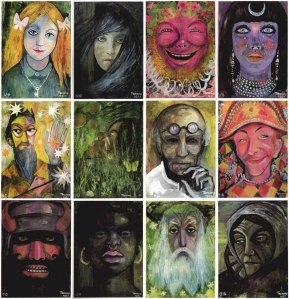
 “A dark and powerful warrior’s face in blacks and reds. He wears a steel helmet, broad square face, open mouth with square teeth and a full black beard.” That’s Tammo de Jonge’s description of the Warrior archetype from his The 12 Faces of Humanity artwork.
 “There will come a day when people of all races, colors, and creeds will put aside their differences. They will come together in love, joining hands in unification, to heal the Earth and all Her children. They will move over the Earth like a great Whirling Rainbow, bringing peace, understanding and healing everywhere they go. Many creatures thought to be extinct or mythical will resurface at this time; the great trees that perished will return almost overnight. All living things will flourish, drawing sustenance from the breast of our Mother, the Earth.” ~ from the
 “A picture in bright reds and yellows is of a smiling twinkle-eyed Harlequin with his typical gold-stuccoed, triangular hat,” is how artist Tammo de Jongh described his Joker archetype, commonly known as the Trickster.
 Chrysalis is filled with trickster magic. It is imbued in cards such as the Ravens, The Corsair, Kali, Three of Mirrors, The Illusionist and, of course, Merlin and Morgan Le Fay. As I wrote in the Chrysalis companion book, “When the world needs to change, the world turns to tricksters. We could no more excise tricksters from magic than trees from forests or stars from heaven.”
 Archetypes, first and foremost, can be defined as constellated energy/in-formation substrates formed in humanity’s Collective Unconscious. The visible, manifest types of these invisible, unmanifest archetypes emerge and re-emerge throughout human history. Archetypes are timeless, hence they become active at different times, in different ages and epochs, and in different cultures. The Collective Unconscious is humanity’s “memory bank.”
 Archetypes, like psyches, are dynamical structures. They simultaneously mirror and influence the course of human events via their light and dark, positive and negative aspects. As human consciousness transitions to a more rational, natural, Earth-centered spirituality influenced by the growing awareness in Gaia and Green Man, we find ourselves simultaneously and adversely impacted by the authoritarian, negative side of patriarchy. As patriarchy devolves, its positive qualities are transferred to the evolving successor; as balance is restored, its negative characteristics dissipate into the dustbin of history.
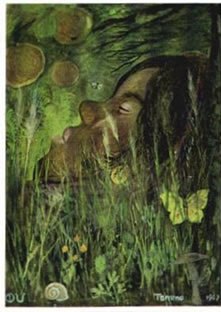

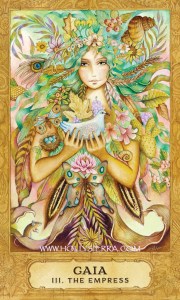 Put bluntly, Gaia urgently needs our help. Each year, humanity consumes one-and-a-half times what Gaia is able to regenerate (
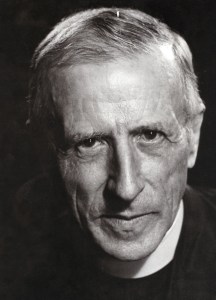
 Artist Tammo de Jongh created an image of a scientist to represent his Observer or Sage archetype. It was an interesting choice in that we seldom associate scientists with spiritual nouns such as archetype, a term frequently used in analytical psychology and metaphysics. That’s because we’re mostly unfamiliar with the metaphysical dabblings of many of the world’s greatest thinkers.
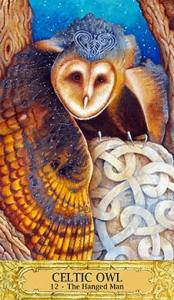 Great minds are observant minds. Observers are often found on the edges of society where their introverted personalities can best protect their sensitive souls. But the observer archetype exerts a significant degree of influence on the personalities of many not-so-great minds. One’s personality is an expression of many unrelated archetypes. This is why in tarot some archetypes will resonate with more clarity than others. These archetypes are seen as kindred spirits or souls.
 This multitude of resonating archetypes is one reason we describe Chrysalis as polytheistic, for lack of a better term. Polytheism itself is defined as a belief in many gods. But we don’t use the words god or goddess in any literalistic sense, but rather as memory aides that permit us to resonate, heal and connect using a rich variety of mythological values, i.e. kindness, compassion, mercy, intuition, freedom, curiosity, etc.
 This is the third in a series of blogs inspired by artwork titled The 12 Faces of Humanity by Tammo de Jongh (below). The first blog in the series can be found
  As an aside, among Collective Unconscious entities the devil is regarded as a Sociopathic Archetype and represents the darkest, most narcissistic aspects of unawakened humanity.
 The subject of the next installment in this series is The Observer, “A scientist type person with round spectacles pushed up above his brow, mostly bald head with white hair at the sides; his left hand is held up to his chin, he looks thoughtful.” ~ Tammo de Jongh
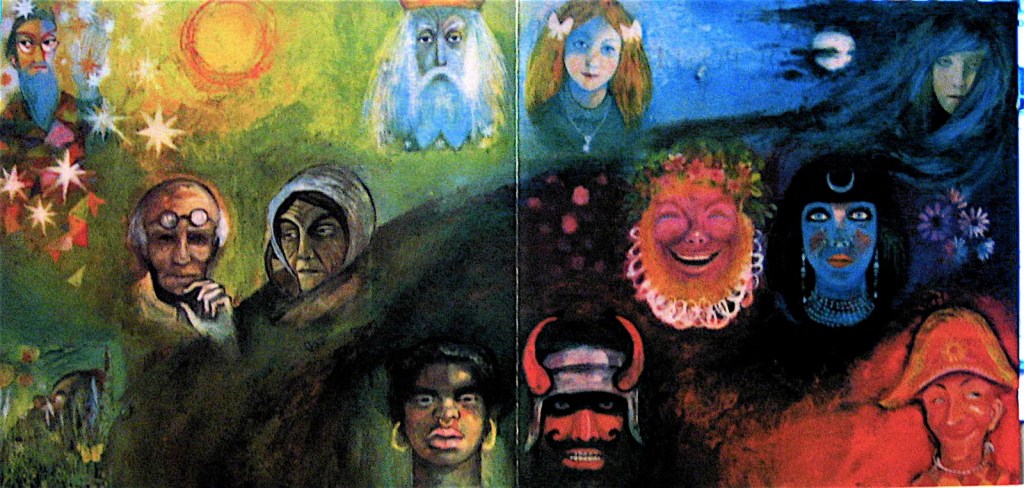 Note: This is the second in a series of blogs about Jungian archetypes inspired by artist Tammo de Jongh’s The 12 Faces of Humankind (pictured above). The first blog can be found

 Chrysalis Tarot