Chrysalis Cosmology

“In ancient Egyptian culture, owls have long been seen as a symbol of darkness and supernatural wisdom protected from those who do not deserve to receive this knowledge. Their dark qualities were celebrated because they were said to link with the unknown mystery of the hereafter.” From Bird Watching by David Swanson.

In Chrysalis Tarot, a good deal of the same symbolism represented in Janie Olsen’s art (left) is expressed on our Celtic Owl card; in traditional tarot this card is called The Hanged Man. However, we find owl symbolism to be far more pleasing and pedagogic

In fact, in our Little White Book, the guidebook we include with Chrysalis decks, we made this observation, “The unseen world remains dark to many because its reality is doubted or denied.” And therein lies the rub: materialism – the denial of God, spirituality and what Chrysalis calls the Unseen or Otherworld.

Chrysalis cosmology posits a duality known as Manichaeism: good vs. evil, light vs. darkness, spirit vs matter. Indeed, by definition as a tool for divination, tarot appeals directly to the Collective Unconscious, a unseen realm or field that adds meaning and direction to life.

Divination is distinct from fortune telling, which is a debasement of tarot. Divination invokes divine guidance and protection. It imbues tarotists with the ability to best use their innate faculties of discernment and intuition – faculties materialists and other non-believers ridicule.

It’s useful, I believe, to revisit three basic beliefs essential to understanding Chrysalis Cosmology and to efficiently using Chrysalis’ unique methodology:

  1. Panpsychism. This is the belief that everything possesses some inherent degree of subjective consciousness.
  2. Non-locality. This is the belief that consciousness itself is not an emergent property of the human brain but rather is what theologian Paul Tillich termed, “The Ground of All Being.”
  3. Interconnectivity. This is the belief that all things both in the seen world and the Unseen Otherworld are interconnected. All cosmic information therefore is accessible. In Chrysalis’ Celtic Owl art, Holly chose the Celtic Knot to symbolize this universal interconnectivity.

Around the same time we published the Chrysalis Companion Book (2014), we put the finishing touches on an academic paper titled Evolution of Consciousness and the Emergent Aquarian Paradigm. My thesis is that the ascending Aquarian Age will shepherd a quantum leap forward in human consciousness. I’ve long felt Chrysalis would play some modest role in that evolution. In the paper, I quote Indian philosopher and mystic Sri Aurobindo: “Man may help or man may resist, but the Zeitgeist works, shapes, overbears, insists.”

Zeitgeist is a fun word. It refers to the invisible spirit or Daemon that comes to dominate a given historical epoch, such as a 2000-year astrological age. Carl Jung saw the advent of Christianity as the dominant theme in our present Piscean Age, which appears to be in its archetypal death throes as it gives way to the Aquarian Age. The Daemon of the Piscean Age was the image of the Divine writ large in humanity’s personal and Collective Unconscious. That “image” includes Christianity, Buddhism, Judaism and to a large extent, Greek Philosophy.
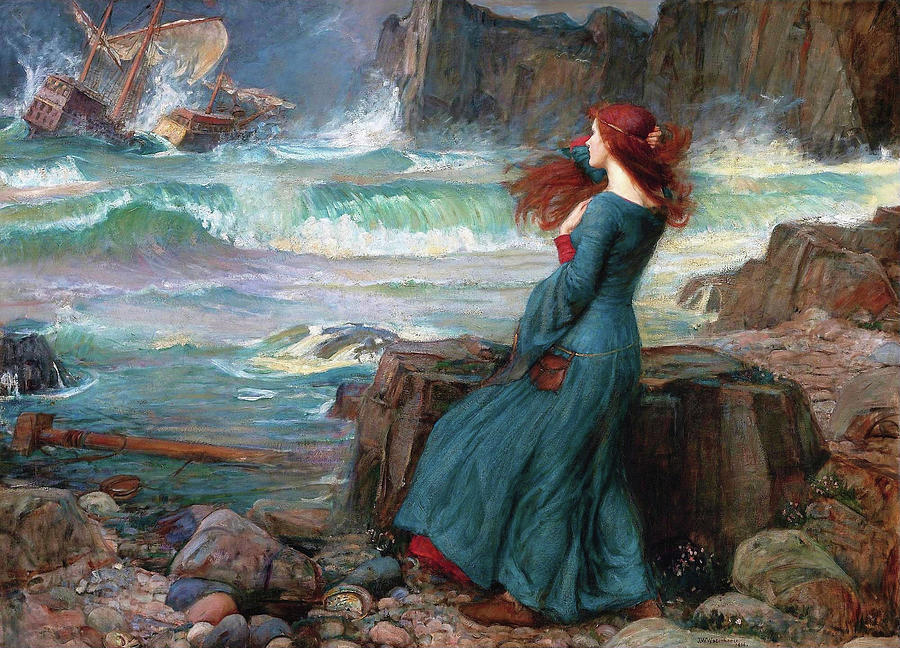
J.W. Waterhouse’s painting of the The Tempest came to mind when I wrote the “death throes of our current Piscean Age.” Certainly the 20th century was haunted and traumatized by one display of the Apocalypse followed by another. Now, firmly in the 21st century and staring down nuclear holocaust, we have all become Mirandas: We beg our father to save the men at sea and still the sinister storm that besets our times.

We make life easier for ourselves and for the paradigm shift into the Aquarian Age when we discern and cooperate with the nascent Aquarian Daemon rather than misperceive and resist it. Such a cooperative effort requires keen critical thinking and acute self-awareness. Too many are in denial of evident truths. Too many remain asleep.

P.S. For more in-depth analysis of the emerging paradigm, please consider subscribing to my Substack, Rational Spirituality. It’s always free!

© Toney Brooks, 2023

Chrysalis and the Spiritual Dignity of Tarot

Holly Sierra and I, co-creators of Chrysalis Tarot, were thrilled back in 2014 when the Tarosophy Tarot Association announced Chrysalis as recipient of its prestigious Deck of the Year award. Tarosophy places great emphasis on the spiritual dignity of tarot, so for us this recognition was both humbling and immensely gratifying. From its inception, we aimed specifically to make a worthy spiritual contribution to tarot’s growing body of work.

When we first placed Chrysalis on the drawing board, neither of us had heard the phrase spiritual dignity of tarot. We simply had hoped to accomplish our spiritual goals for Chrysalis within the context of the age-old mythology and spiritual teaching called The Hero’s Journey.

Analogous to the Hero’s Journey is the Quest for the Holy Grail, a universal legend symbolizing self-transformation, the personal metamorphosis that inspired the name Chrysalis. Mythologist Joseph Campbell called the grail legends the foundational myths of Western civilization. The grail quest is a quest to discover the Authentic Self. The Hero’s Journey allegorizes this struggle that occurs between the authentic (spiritual) Self and the ego, the ultimate self-sabotager.

We sought also to create a deck well suited to the emerging worldview or paradigm shift that’s been unfolding for some 25 years and is now (2022) at a tipping point. This shift traces its shallow roots to the Neo-Pagan and New Age Movements; its deep roots to the turbulent social upheavals of the ’60s that advanced civil rights, women’s rights and ecology, epitomized in Chrysalis by the Green Man and Gaia archetypes.

Although not New Age per se, the secularity of Chrysalis dovetails with several New Age Philosophy tenets, most notably holism and humanism. Creating a definitively secular deck was another of our goals; we dared not burden Chrysalis with dogmatic religious frameworks, iconography or esoteric symbolism. Neither did we want to create a deck that bowed to archaic institutional hierarchies that represented absolute civil and spiritual authority; in Chrysalis all spiritual paths are equally valid and respected; personal responsibility is paramount. Chrysalis is not about conformity of dogma or “correct beliefs,” but rather about questioning all beliefs and using innate critical thinking skills.

Chrysalis abhors patriarchy, even hierarchy. We strove for overall balance between our deck’s yin-yang energies without social stratification (one reason for replacing the “court cards”). We pushed the envelope to accomplish a masculine-feminine balance and promote personal spiritual empowerment. For example, when we refer to “the divine” in Chrysalis we generally refer either to the divine feminine or to the androgynous divine child within. The Divine Child (pictured above) is both an Otherworld archetype and a Chrysalis major arcana card.

In Chrysalis, the Otherworld is the name we gave to the abode of archetypes, ancestors, faeries and myriad other benevolent spirits, including shamanic spirit animals. It’s corollary is often called the Akashic Field.

We engage this Otherworld via 22 major tarot archetypes and other archetypes unique to Chrysalis. This extended family includes our replacements for tarot’s traditional court cards, an ensemble of medieval troubadours we call The Troupe. Members of The Troupe, who are also archetypes, variously represent spirit guides and ancestors along with the querent’s personal characteristics and personality traits. They also can symbolize helpful individuals, often strangers on their own journey who the querent might meet along the way. All Troupe members have personal spirit animal attributes known as familiars illustrated on their cards. Totems or spirit animals also are found on Chrysalis cards.

Morgan le Fay as The Sorceress

Otherworld engagement via archetypes, an aspect of tarot renowned psychologist C.G. Jung found fascinating, is accomplished through shamanic-style communication between the Collective Unconscious (the Otherworld) and the personal unconscious mind. Information streamed from the Otherworld resonates during a tarot reading and is interpreted intuitively – tarot is not an exercise in code breaking. Chrysalis regards the 78 tarot cards as symbols of multivalent potentialities that mean different things to different people at different times in their lives.

Archetypes of the collective unconscious have resonating frequencies and are quantumly entangled with the personal unconscious; the stronger the querent’s personal bond with a particular archetype, the stronger the resonance. As Nicolai Tesla wrote, “[We should always] think in terms of energy, frequency and vibration.” Everything in nature vibrates on a specific frequency, including the Otherworld archetypes.

In adapting Chrysalis to the new connected-universe worldview, we first had to identify this worldview’s salient characteristics. First and foremost, it’s characterized by belief in a living, interconnected and interdependent universe. In this living universe, we become co-creators and function as biological circuits (feedback loops, if you will) connected to a vast Web of Life, as Fritjof Capra termed it. Capra’s Web of Life includes everything in the cosmos; everything is energy, including matter and information.

Secondly, the new worldview is both spiritual and material as well as scientific. It provides a groundwork for a new rational spirituality. Although this notion places Chrysalis at odds with classical Newtonian mechanics, it is complementary with quantum mechanics and the New Science of unified physics. This New Science of unified physics is both holistic and holographic. It views contemporary notions of a dead-universe separated from reality as a dangerous illusion, a fact sadly borne out by human history.

Thirdly, Chrysalis emphasizes the importance of healing through selfless compassion. Having compassion and empathy for others, as well as for ourselves, provides a powerful instrument for healing. Moreover, compassion and empathy unite us rather than separate us. Tarot cannot assist with personal transformation unless it also helps heal a broken psyche. To that end many Chrysalis cards evoke healing and Chrysalis is often described as a healing deck.

Among the many changes Chrysalis makes to traditional tarot, a schema well over 100 years old, is the elimination of limiting belief structures and strictures that engender fear, anxiety or negativity. All pose significant stumbling blocks to self-transformation and healing.

Any self-transformation modality is, by definition, a dynamic spiritual enterprise. To claim spiritual dignity, it must therefore afford spiritual efficacy. It cannot lay legitimate claim to spiritual efficacy unless it’s friendly to beginners and readily accessible. That is a tall order for tarot, which at least today remains an esoteric system tethered to the existing patriarchal, dead-universe (material) worldview. Tarot, however, is constantly evolving and gaining greater awareness and acceptance among an increasingly enlightened public starved for rational spirituality in a living universe.

The Tarosophy Tarot Association aims to make tarot a widely accessible wisdom tool for personal empowerment and personal growth, a goal Chrysalis Tarot wholeheartedly supports and emulates.

© Toney Brooks, 2015, 2022; Chrysalis Art © Holly Sierra

Making the Unconscious Conscious

PapaLegba appThe main goal of Chrysalis is increased self-awareness. You’ve heard many times assurances that “all the answers are already inside us.” We just have to coax them out. Tarot is one of many modalities people employ to achieve this highly desirable goal.

Increased self-awareness = spiritual growth and higher consciousness. This is one reason Chrysalis is widely recognized as a “spiritual deck” – one that promotes “active imagination.”

I recently ran across a piece that speaks eloquently to the quest of making the unconscious conscious and I would like to share it. The author is Doug Hilton, a frequent contributor to Quora.

To the question of how to make the unconscious conscious Doug writes:

The unconscious does it for you. We are the subconscious/unconscious, which does the data processing, and has no awareness.

What is conscious? It helps to direct our senses, by constantly providing feedback to the subconscious.

Being able to remember the exact sequence of events, cause and effect, is vital to survival. In theory, every bit of long-term memory has a sequence code, or something that performs the same function. If you are not consciously aware of something, then it cannot have a sequence code, and cannot be stored long-term. That includes thoughts, decisions, everything ever imagined, and data from out senses.

How we cope, with an ever-changing world? We make predictions, in order to make choices.

How do we evaluate all things, in order to make choices? Emotional value, which is determined by a combination of our genes, knowledge, experience, the environment, our emotional and physical state, and more. Google brain chemical reward. To a great extent, these chemicals determine human behavior, by determining emotional values.

In order to make predictions, the subconscious must run simulations for every choice. That includes every physical movement. It calculates the best outcome (highest emotional value), or least negative outcome (pain, fear, shame, humiliation….etc), and decides. The decision is passed on to conscious. At times, other choices are included, which gives the illusion, that the conscious is making the decision.

The subconscious is capable of mixing and matches a million bits of memory. Imagination needs regular exercise. Search the web for subjects, that excite your brain, because you will remember more details.

Absorb as much information, as you can. You will eventually be able to ask intelligent questions. If you can’t find the answers, then press your brain. If possible, become obsessed, with discovering the answers. They should be the first thing on your mind, when you wake, and the last, before falling asleep.

Your brain will eventually deliver something. If you continue pressing it, your imagination will be “on” full time. You’ll have inspired thoughts, inspired dreams, and inspired questions. You’ll see connections, that others miss.

jung unconscious
© Toney Brooks, 2018

When Archetypes Cognate

keep-calm-and-look-for-cognates

I know, I know, but let’s have a little fun. While the linguistics may be battered and bruised – cognate is not a verb – in this instance let’s suppose otherwise. Cognate (the adjective) means analogous in nature; of the same bloodline, specifically a female bloodline. Male archetypes, i.e. gods and demigods, would therefore arise from agnate bloodlines. We’ll return to these terms directly.

The purpose of this blog and several others to follow it is to explain how and why Chrysalis Tarot distinguishes itself from more traditional decks whose origins and schematics date to the turn of the 20th century when metaphysical worldviews were much different and far less sophisticated than today. For example, recall the days of the archaic “divine right” of kings, queens, emperors and empresses to rule; of the unquestionable spiritual authority of supreme religious leaders; of hocus pocus, spells and sundry other superstitious fiddle-faddle which, unfortunately, still pollute traditional tarotists and other metaphysical disciplines today.

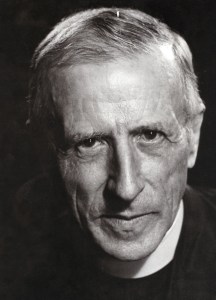
Pierre Teilhard de ChardinWhat is an archetype and how to they cognate? Well, an archetype, in 21st century metaphysical parlance, can be defined as an integrated, anthropomorphized emergence of information defined as attributes that exist concurrently in the brain and in what is known as the noosphere, a concept developed by the great philosopher Teilhard de Chardin (left), who often was called the Prophet of the Information Age. The noosphere itself is cognate with the Akashic Record, which also is known by many other names, e.g. Jung’s Collective Unconscious, aether, astral plane, Indra’s Net, etc. In Chrysalis we refer to it simply as the Otherworld.

When you read using Chrysalis Tarot, you access a particular psychological construct located in the noosphere and also in your own consciousness. You do what shamans do: you access the astral plane, where the ones and zeros (the essence of all information) that comprise the eternal energy (consciousness) of your ancestors and archetypes exist. Gods and goddesses are archetypes; integrated information constructs. The more information the better.

What’s equally important is what you DON’T do. You do not access an objectified Divine Will or some other mystical source of preordained circumstance from which you have no escape. Such thinking epitomizes precisely the type of Sunday School spirituality Chrysalis Tarot seeks to debunk!

hathor by Sharon George
Hathor, by Sharon George

When archetypes cognate they evolve – they subsume and share attributes with other archetypes and grow in grace and knowledge. The consciousness of those individuals with whom they communicate, with whom they experience affinity, also evolves. Spirituality is fluid, not static, and cannot be codified. Codification of spirituality results in the entropy of spirituality, a.k.a. religion.

Throughout human history the most ubiquitous cultural archetypes have been the Great Mother Goddess and her cognates. Examples of  her ethereal offspring are Aphrodite, Ariadne, Isis, Hathor, Mary of Nazareth, Diana, Gaia, Freyja, Quan Yin, Chehooit, Kali, Ma’at – the list goes on and on ad infinitum: the cognation of divinities is timeless.

Traditional tarot proceeds from a masculine, monotheistic, abnate mindset that is uncompromisingly dogmatic and authoritarian. Chrysalis Tarot, on the other hand, is unabashedly feminine, polytheistic, cognate, free and self-liberating. Chrysalis was created to empower its users as well as to actively assist them with spiritual growth – to help them better understand themselves and the true nature of reality.

© Toney Brooks, 2018, first in a series

Ancestors and Soul Loss

soul-retrieval
Soul Retrieval, by Sanda Cook

In metaphysics when we speak of soul loss, recovery or retrieval, we refer to a spiritual malady best described as an experience of isolation and brokenness that makes us feel, well, like a lost soul. There are many beliefs about soul loss and retrieval and many approaches to healing it. We shall concentrate on Chrysalis Tarot’s approach and the shamanic healing power of individual Family Constellations composed of ancestors.

Ancestors help us understand who we are and discern our purpose in this life.

Describing soul loss, psychologist Sandra Ingerman states, “There are many common symptoms of soul loss. Some of the more common ones would be dissociation where a person does not feel fully in his or her body and alive and fully engaged in life. Other symptoms include chronic depression, suicidal tendencies, post-traumatic stress syndrome, immune deficiency problems, and grief that just does not heal. Addictions are also a sign of soul loss.”

Water Naiad

Recovering lost fragments of soul and restoring wholeness most probably do not require spiritual or psychological counseling, let alone intervention of an experienced shaman.  Treatment will depend, of course, upon the severity of soul loss/fragmentation and correct identification of its cause(s).

However, in this exercise it will require that you task your imagination, the most effective healing tool we possess, to the matter at hand. The painting above by Russian artists Svetlana and Igor Anisiforov is titled Water Naiad affords perfect symbolism. Water is appropriate because it symbolizes higher wisdom; the unicorn symbolizes creative imagination; the castle is the abode of The Ancestors, and the moon symbolizes both personal and collective unconscious.

The fish symbolizes the dream world, the world you will allow your imagination to inhabit during this meditation. To enter it you need only to still your mind and tune to your family frequency – every family has a discrete frequency or vibration. It’s always there and available, but we seldom pay much attention to it. This is likely due to cultural biases against an active afterlife in an unseen world of dynamical information.

harameinFamily Constellations by definition presume the reality of an active afterlife. They recognize that our ancestors and ancient lineage determined who we are, physically and spiritually, and that any dissociation, isolation or fragmentation we experience likely stems, at least in part, from benign neglect of our ancestors.

In Chrysalis, we came up with the idea of an Ancestral Council Reading. We use the cards, mostly members of The Troupe, to represent individual ancestors to whom we feel closest. The cards then form the foci for the meditation.

An Ancestral Council Reading and a Family Constellation are effectively the same thing: by tuning into our family frequency, we engender a silent exchange of information heard only through faculties of intuition and creative imagination. It’s not at all difficult.

Maple Leaves
Maple Leaves by Svetlana and Igor Anisiforov

Soul loss is first and foremost about imbalance, therefore soul recovery is about restoring balance. In Japan maple trees are called kito, which means calm and restful peace – the primary attributes of balance and wholeness. These attributes are constant themes throughout Chrysalis Tarot. They also are attributes of Gaia, interpreted below by visionary artist Alex Grey.

gaia-alex-grey


Soul Retrieval: Mending the Fragmented Self by Sandra Ingerman.

Chrysalis Spirituality

21 - Psyche“The point is that you start with any image … Contemplate it and carefully observe how the picture begins to unfold or to change. Don’t try to make it into something, just do nothing but observe what its spontaneous changes are. Any mental picture you contemplate in this way will sooner or later change through a spontaneous association that causes a slight alteration of the picture. You must carefully avoid impatient jumping from one subject to another. Hold fast to the one image you have chosen and wait until it changes by itself. Note all these changes and eventually step into the picture yourself, and if it is a speaking figure at all then say what you have to say to that figure and listen to what he or she has to say.” ~ C.G. Jung

The process Jung describes in the above quote is called active imagination, the key to personal transformation. Active imagination produces a rich, fanciful dialogue between the personal conscious and unconscious minds. Via the unconscious, this conversation acquires a third party – the Collective Unconscious, which Chrysalis calls the Otherworld. It’s the divine cosmic realm of archetypes, gods, goddesses, demigods, angels, fairies, spirit guides including animals, and the ancestors. While transcendent, the Otherworld is in no way supernatural. The Otherworld is a spatiotemporal aspect of the natural world, albeit a mystical one.

PapaLegba appActive imagination dialog weds psychology, particularly archetypal psychology, with mysticism, the experience of liminality watched over by Papa Legba. In Greek mythology, this liminal threshold or boundary between worlds would be presided over by Hermes. Both he and Papa are liminal gods or archetypes.

The ultimate goal of active imagination is to enable you to synthesize an alternate reality that exists for the sole purpose of moving you toward your Higher Self, ultimate truth and personal transformation (telos). It is the Hero’s Journey of emergent Self that requires strength, an open mind and courage. You may need to overcome any disabling beliefs currently holding you back.

Jung calls this synthesis the transcendent function. It’s transcendent because it rises above both the conscious and unconscious mind. In Chrysalis, the root metaphor for this function or synthesis is personal transformation – the butterfly or soul as symbolized by Psyche. Both those words translate as butterfly in Greek. In this instance soul is a perspective or viewpoint, not an etheric substance. Conversations with the unconscious – the transcendent function – are cathartic and healing, as well as transformative.

Carl-Jung-Inspirational-Quotes-about-conscious

Jung’s familiar quote, once the depth of its meaning is fully grasped, aids our understanding of destiny, the realization of one’s full potential. By raising the unconscious mind to the level of conscious awareness, we are able to free ourselves from the shackles of burdensome rationality and self-imposed limitations. We become the captains, not slaves, of personal destiny.