
 “Alice” in this blog’s title could easily refer to the Alice of Alice’s Adventures in Wonderland. Pilgrim spirituality certainly has a quirky rabbit hole quality about it; one never knows what to expect next. Pilgrim spirituality is also spirituality that requires extraordinary faith in the unseen world and an unquenchable sense of purpose that escapes easy explanation.
This faith may be interpreted as faith in one’s inner voice and instincts, in the Law of Attraction, in the ancestors, or in the Higher Self’s inexorable pull on your psyche. Alternatively, it could imply faith in the infinite wisdom of a hookah-smoking caterpillar. However contextualized, it’s faith in the mystical apparatus of synchronicity that guides The Pilgrim along her journey toward personal destiny and self-actualization.
Any attempt to define or dogmatize this faith only strips it of its beauty and sovereignty. There is a great deal of difference between religiosity and spirituality.
Our blog’s Alice is the nickname of a small town in central Australia officially called Alice Springs. In 1977, in the spirit of Doris Lessing, with four camels and her faithful dog, Diggity, Robyn Davidson began a 1,700 mile pilgrim’s quest from Alice Springs through the rugged interior of Australia’s Outback to the Indian Ocean. Against all odds, the pilgrimage took over 7 months and earned her the nickname, “The Camel Lady.”
In the less arduous interior journey of Chrysalis Tarot, The Troupe cards like The Pilgrim are there to remind us of the spiritual axiom that no one ever walks alone. The Troupe helps us allegorize our own spiritual progress and discover the underlying purpose of our quest, a purpose that often comes as a complete surprise. Pilgrimage spirituality assures us that we will meet the right people and receive the right inspirations along destiny’s road at the right time.

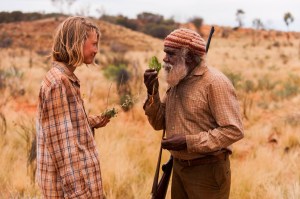
“She [Robyn Davidson] was a good woman. She had a dream about a kind man who would help her find her way, then she met my father [Mr Eddie] near Wingellina. He knew that country and he helped her. When she wrote her book, Tracks, my father was in there.” ~ Jean Inyalanka Burke, 1945-2012
Mr. Eddie (actor Rolley Mintuma) is pictured with actress Mia Wasikowska, who played Davidson in the filmed version of Tracks, now available on Netflix. This is a link to the book, which I highly recommend.
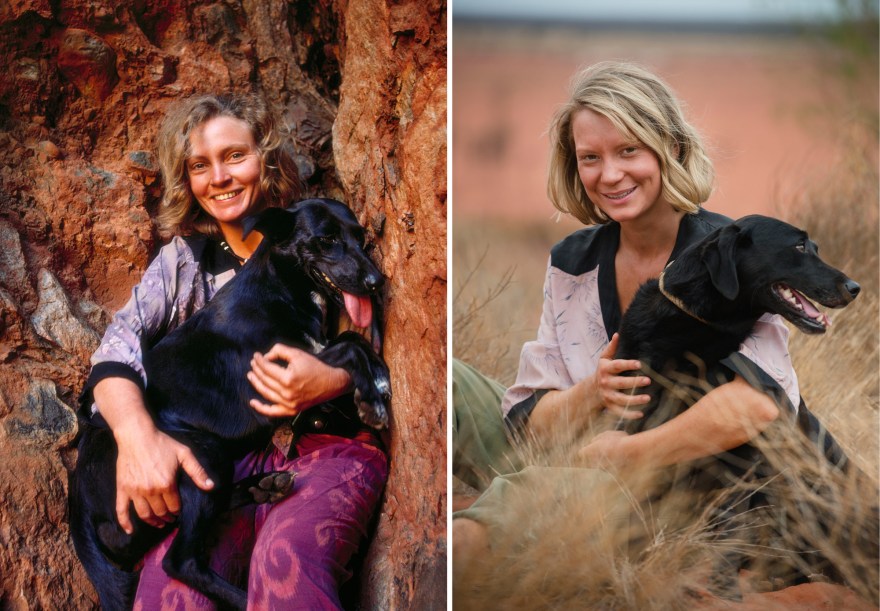
In memory of storyteller Jean Inyalanka Burke.

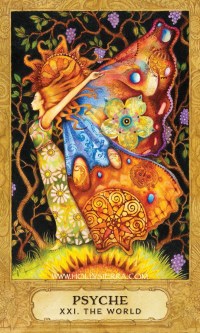 “The point is that you start with any image … Contemplate it and carefully observe how the picture begins to unfold or to change. Don’t try to make it into something, just do nothing but observe what its spontaneous changes are. Any mental picture you contemplate in this way will sooner or later change through a spontaneous association that causes a slight alteration of the picture. You must carefully avoid impatient jumping from one subject to another. Hold fast to the one image you have chosen and wait until it changes by itself. Note all these changes and eventually step into the picture yourself, and if it is a speaking figure at all then say what you have to say to that figure and listen to what he or she has to say.” ~ C.G. Jung
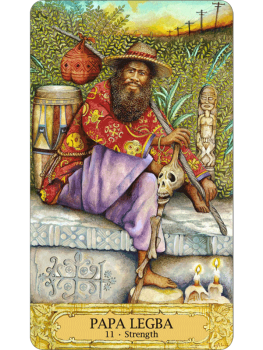 Active imagination dialog weds psychology, particularly archetypal psychology, with mysticism, the experience of liminality watched over by Papa Legba. In Greek mythology, this liminal threshold or boundary between worlds would be presided over by Hermes. Both he and Papa are liminal gods or archetypes.


 I’ll use a Rubik’s Cube to illustrate the importance of feedback to the inter-connectivity of everything in the universe. It’s important to us because the prevailing worldview tends to undervalue personal introspection, especially if it occurs within a tarot reading or another misunderstood form of contemplation designed to engender self-knowledge and personal transformation.
 You could posit that in today’s worried world, it’s more important than ever to increase conscious awareness and knowledge, and to evolve a more rational understanding of how the world works and the co-creative role humanity plays in cosmic evolution. It’s important because our present way of living is unsustainable. A paradigm shift – a new worldview – is essential to the survival of our species, if not to the Earth itself.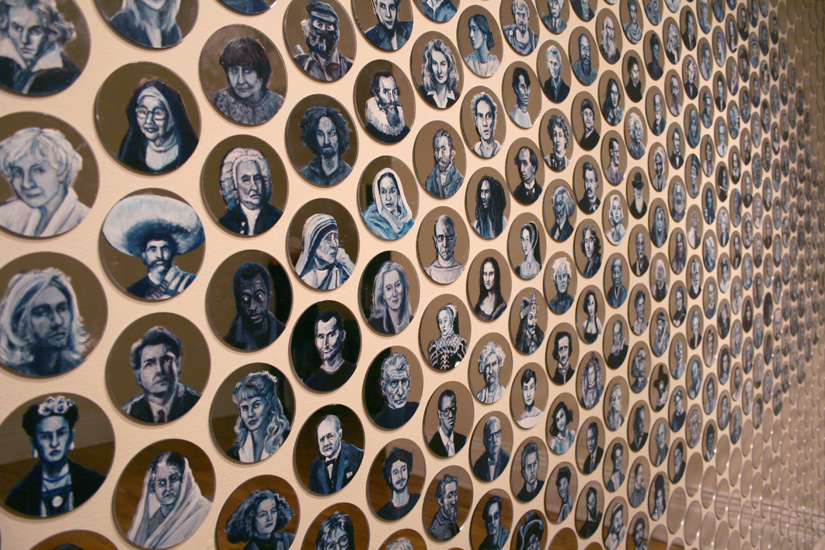
 Chrysalis Tarot